
Greenwood Previous Residents by Era
One Greenwood address has several historical layers. The record trail changes with the period, and no single source proves an uninterrupted household history. Greenwood County was not created until 1897, so an earlier property or family event may be held in Abbeville or Edgefield records. After that, recorded conveyances, plats, directories, maps, newspapers, public death indexes, and census schedules provide dated leads. Start with the source closest to the relevant Greenwood period and preserve the exact date and citation at every step.
| Source | Verified period | Where held | What it can add |
|---|---|---|---|
| Parent-county records | Before Greenwood County formed in 1897 | Abbeville and Edgefield record routes | Earlier land, court, or family material may not be under Greenwood |
| Greenwood RMC conveyance books | 1899–1923 | SCDAH microfilm | Grantor, grantee, and property-transfer trail |
| Greenwood plat books | 1912–1945 | SCDAH microfilm | Lot, subdivision, and legal-description continuity |
| Greenwood City Directory | Oldest confirmed: 1908 | Lawrence Genealogy Room | Dated household or address lead; later run needs verification |
| Local obituary indexes | 1895–present across named titles | Greenwood County Library | Death notice, kin clue, and issue-date route |
| Federal census | Released through 1950 | Library databases and federal sources | Household at the census date, subject to ward and address checks |
Greenwood's online property portal does not publish its first indexed year. Use it for the current Greenwood searchable period, but move to the Greenwood Clerk/ROD counter and then the archive's microfilm when a record falls outside visible online coverage.
Greenwood Address History Before 1897
Greenwood County was formed from parts of Abbeville and Edgefield counties in 1897. That boundary is the main Greenwood early-records trap. A family or parcel in the same physical area before 1897 may appear in a parent county, not in a missing Greenwood file. The South Carolina Department of Archives and History lists Greenwood RMC conveyance books from 1899 through 1923, master's conveyances from 1904 through 1923, and plat books from 1912 through 1945.
The office name also changes over time. Greenwood's modern land-record office is called the Register of Deeds, while archive descriptions use Register of Mesne Conveyances, or RMC. Greenwood County says that naming change occurred on January 1, 1998. Search both terms when requesting old material, because they describe the same local land-record lineage in different eras.
Trace Greenwood Previous Residents in Deeds
A Greenwood deed chain follows property interests, not every person who lived at the address. Begin with the current Greenwood street spelling, then collect the parcel or map number and legal description from the Greenwood County Assessor or GIS. A mailing address is correspondence information, while a situs address identifies the parcel's location. The legal description is the durable land identifier, often tied to a lot, subdivision, plat, or metes-and-bounds description. Do not substitute an owner's mailing address for residence evidence.
Greenwood Official Records Quick Search accepts grantor/grantee, subdivision, document type, or document number, plus recorded-date filters. Its Index Only scope searches multiple entered words individually in indexed information. Its OCR/full-text scope treats multiple words as a phrase in document contents. Document images require a verified account, so the Greenwood Clerk/ROD counter is the fallback when an image or older record is needed.
- Write the Greenwood address exactly as current local records spell it, then collect the parcel or map number and legal description.
- Search the current owner or buyer, a document number, subdivision, or other recorded clue in the Greenwood ROD index.
- Read the acquisition document through the verified-account or counter route and record the seller, recording date, prior reference, and legal description.
- Search that seller as a grantee to find the earlier acquisition, then confirm the same parcel or legal description.
- Repeat backward. When the online portal stops helping, use ROD terminals and index books, then SCDAH conveyance and plat microfilm.
- Grantor and grantee
- The grantor transfers an interest. The grantee receives it. Their roles must be read in the particular recorded instrument.
- Chain of title
- A sequence of recorded property transfers connected by the same parcel or legal description.
- Legal description
- The recorded land description, such as a lot, subdivision, plat, or metes-and-bounds wording. It is often more stable than an old street number.
Greenwood ROD Access Before Old Searches
The online search form is useful, but a search box is not evidence of complete digitization. Greenwood's official portal identifies a Real Property department and offers date ranges and short relative-date filters. It does not publish a first online-index year, a documented result cap, an image fee, or a full advanced-search field list. The Greenwood Clerk/ROD has public terminals and index books; staff can help visitors use them but does not research records for a visitor.
Very recent documents can also appear late. The Clerk says ROD documents and Common Pleas items delivered after 4 p.m. are not recorded until the next workday and may take up to one work week to appear online. For the historic end, use the SCDAH Greenwood County guide and its listed microfilm. This public-screen, counter, then archive sequence is more reliable than guessing a cutoff.
Greenwood Past Addresses on Sanborn Maps
Sanborn maps give the built-environment layer of a Greenwood past-resident search. The Library of Congress has Greenwood sets from 1884, 1889, and 1904. The 1884 set has one sheet, the 1889 set has two, and the 1904 set has six. They can show a street layout, building footprint, construction or use notation, and nearby structures. They cannot identify an owner or household.
A 1904 Greenwood Sanborn map can be paired with the 1908-or-later city-directory collection, RMC books from 1899 onward, and a legal description. Greenwood-specific citywide renumbering or renaming dates were not found in the official sources, so do not assume a modern house number is unchanged. Use plats, cross streets, map details, and deed references to bridge the gap.
Greenwood Previous Residents in Households
Greenwood property ownership is only one layer. To identify earlier Greenwood households, test the deed timeline against dated household material. The Greenwood County Library confirms a city-directory category whose oldest volume is 1908, plus newspapers, obituaries, maps, census resources, vertical files, and special collections. Ask whether a physical directory has a street-order section; the Library confirms city directories but has not published a particular criss-cross run or its years.
The household sequence is address or legal description → deed date and transfer party → closest directory issue → released census date → obituary or probate lead. Each link is evidence for its own date, not a claim that a person stayed there between records. The local holdings and ways to read a volume are covered in the Greenwood city directories collection.
The Lawrence Genealogy Room also holds local maps, archives, school and church material, and photographs. Its catalog is incomplete, so staff conversation can locate a source that a keyword search misses.
Greenwood Previous Resident Requests
For a bounded Greenwood house-history question, the Library research form offers city directories, maps, archives, pre-1900 deeds, probate and wills, census records, and vertical files. State the Greenwood house address, nearest cross streets, parcel or map number if known, exact years wanted, and a known surname. The Library permits up to 30 minutes for an individual request and limits users to two requests each month. It recommends a professional genealogist where a project needs more in-depth time.
The request does not promise a complete “who lived here” report. It is a route to a defined local source. Greenwood County also provides the SC FOIA request portal for a specific City or County file, such as a building or Planning record identified by address, case, or date span. A permit file can help date construction or alteration, but it is not a household roster.
Greenwood Previous Residents and Vital Evidence
Death, probate, and marriage material can help close a Greenwood historical trail. South Carolina's Department of Public Health is the state custodian for vital records, while Greenwood Probate Court handles local estate work and marriage-license records. The public South Carolina death indexes for 1915 through 1967 are a starting point. A death record provides a date-led fact, not a complete history of a Greenwood address or household.
South Carolina DPH Vital Records supplies the official state route for birth, death, marriage, and divorce events.
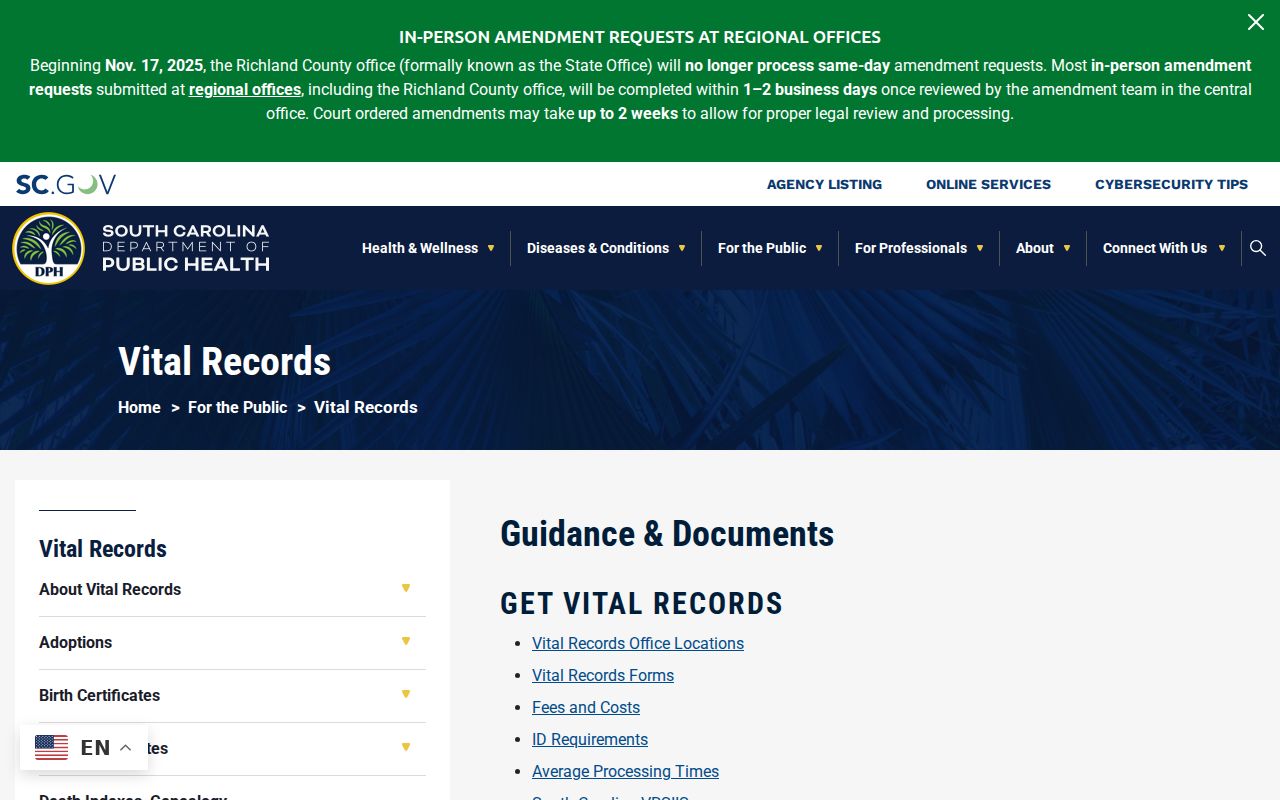
The vital-record portal is useful after a dated directory, obituary, or probate clue identifies an event. It should not be used to infer a current address.
South Carolina's Vital Statistics statutes set the access rules: death certificates become public after 50 years, while birth records become publicly viewable after 100 years in suitable format.
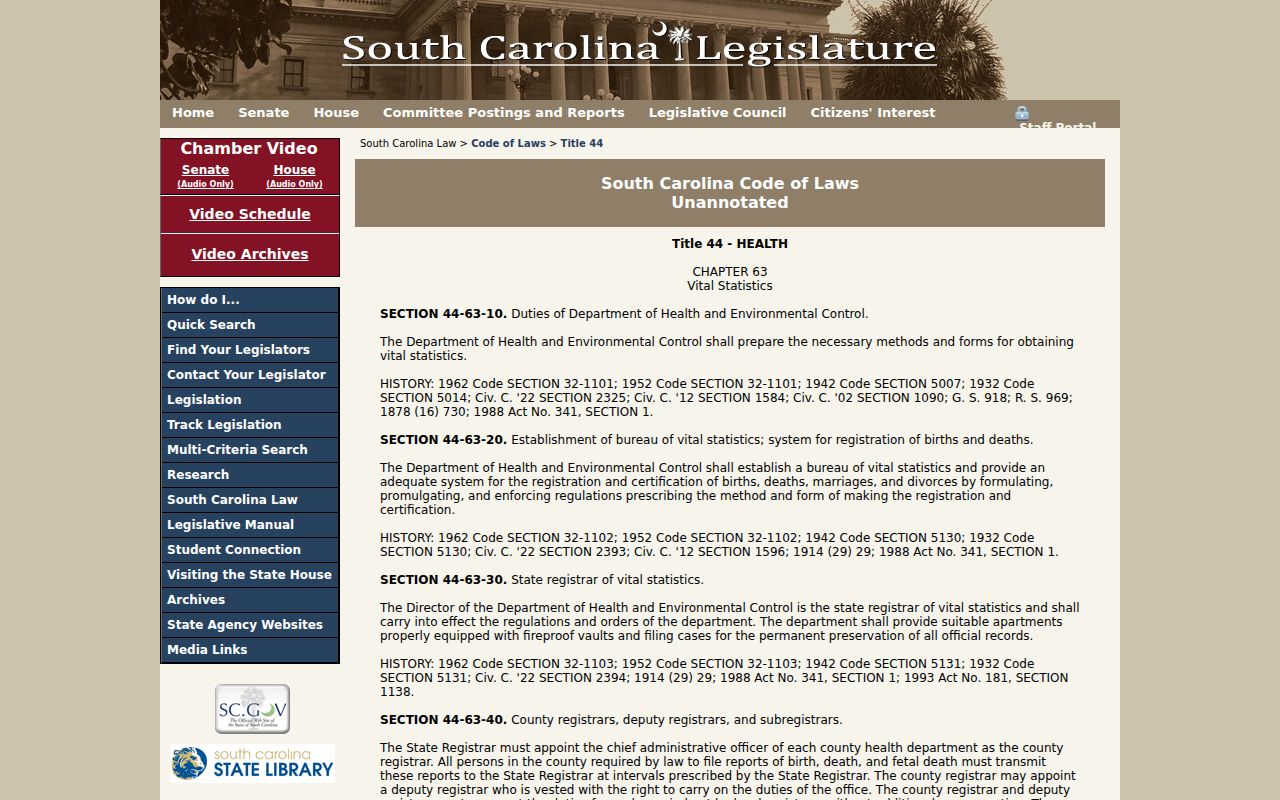
Before the public period, certified copies have eligibility limits. The Library obituary index and historical newspaper microfilm can provide a different, dated path when a certificate is restricted.
Greenwood Past Records Are Not Address History
Custody and court screens may share a person's name, but they are not reliable for historical Greenwood address work. They cover different systems, often at a point in time, and should not be used to claim a Greenwood home address or household connection. Confirm a legal or archival question with the responsible court or custody agency, then return to dated parcel, deed, directory, map, census, obituary, or probate evidence for a Greenwood address-history question.
PACER is the official federal case-record system and requires an account. Federal cases are separate from the South Carolina trial-court gateway and from a Greenwood address trail.
A federal case record can address a particular court matter, not establish who lived at a Greenwood property.
Greenwood County Detention Center publishes an inmate-search gateway, but the inspected page did not expose field details, coverage, update timing, or result fields.
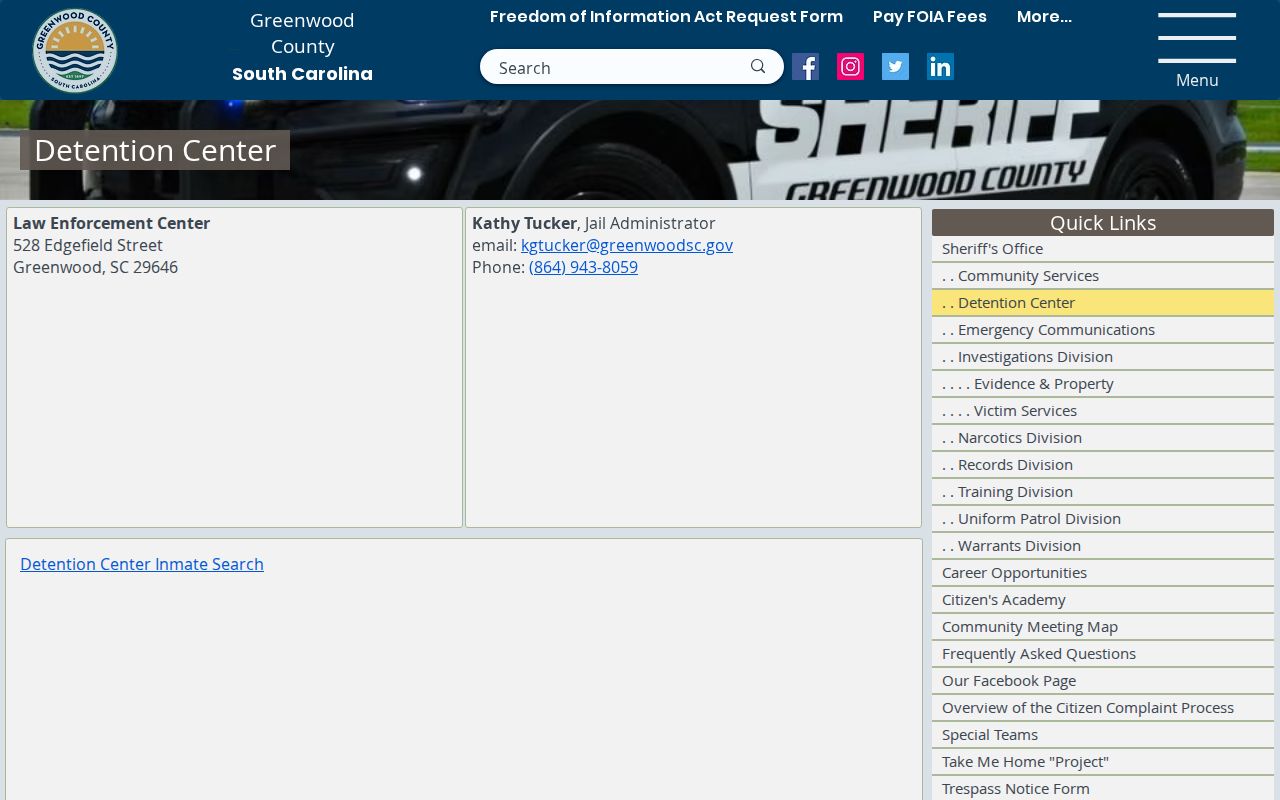
A detention listing is a point-in-time custody record, not proof of a conviction or a person's home address.
The Federal Bureau of Prisons inmate locator is the federal-custody channel, distinct from county detention, state prison, and court records.
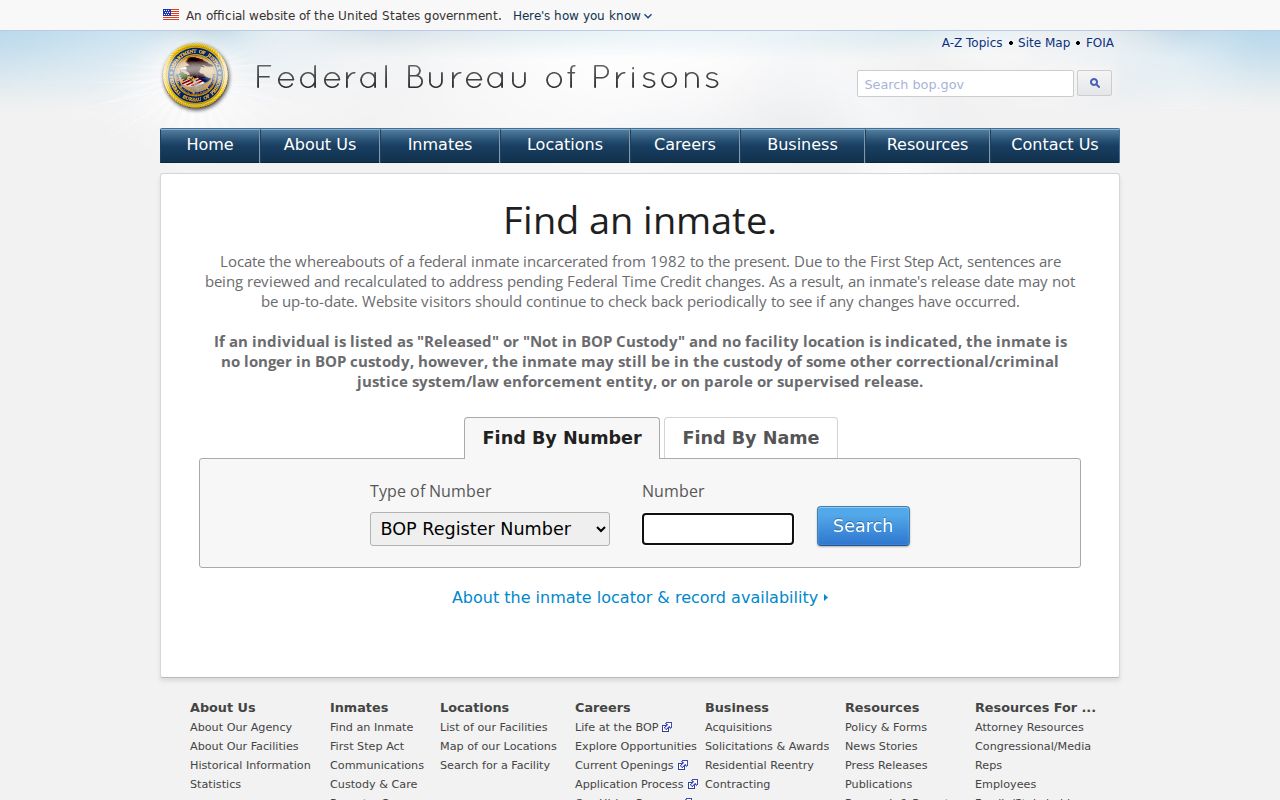
Federal custody information must be confirmed with its own identifiers and does not reconstruct past households.
South Carolina Department of Corrections' inmate search covers people currently sentenced to and incarcerated in SCDC. It offers SCDC ID, SID, first-name, last-name, and phonetic-match inputs.
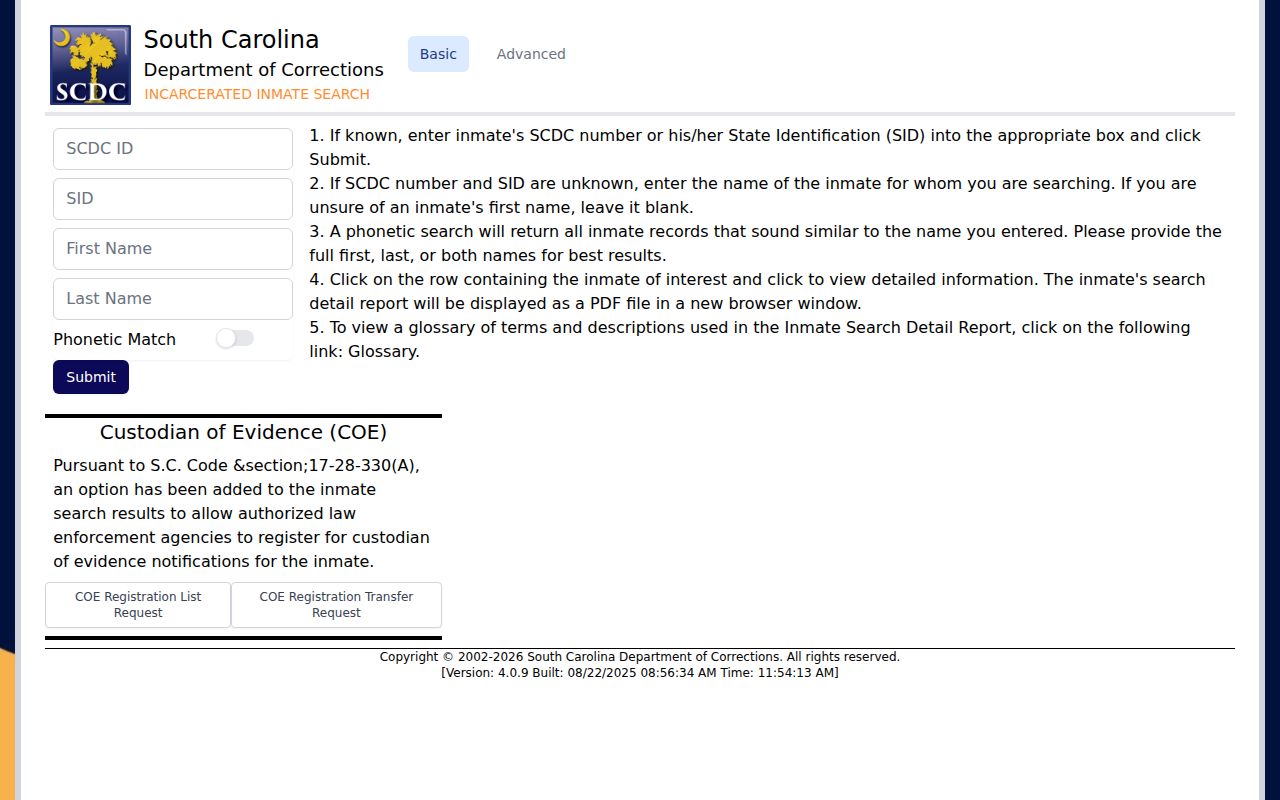
Its scope does not establish county, federal, or complete historical custody, and it is not an address-history source.